Whenever I think of Japan or anything Japanese, my mind goes back to middle school, when we were learning about the fall of the Qing dynasty and the start of the “century of humiliation.” As a 12-year-old sitting in that classroom, listening to my history teacher describe how the Eight-Nation Alliance soldiers including those from Japan entered the Forbidden City and the Summer Palace, stealing precious artifacts, treasures, and rare books, and how China was later forced to sign the Boxer Protocol, I could barely take it. I felt enormous anger toward the invaders and could not look away from how deeply the Chinese people and the nation had suffered. Then came the lessons on Japanese-occupied Manchuria and the Nanjing Massacre, chapter after chapter of pain.
I remember watching TV on weekends, where there always seemed to be another drama about Japanese spies. Whenever those shows came on and my mom was nearby, she would comment, “The Japanese are so bad.” So when I learned in class that the United States had dropped atomic bombs on Hiroshima and Nagasaki, followed by Japan’s unconditional surrender, I felt a strange sense of relief. To me, it symbolized an end, at least in history books to the suffering I had been learning about.
As a kid who grew up learning modern Chinese history, I never imagined I would ever set foot in Japan. My view of Japan didn’t go far beyond my history classes and the portrayals on TV. It wasn’t until many years later, when I traveled there for the first time, that everything began to shift. I was surprised to find Kanji everywhere in subway announcements, on billboards, and suddenly, I felt a strange sense of connection. I could read so much of it.

I could get around just fine in what would have been considered “my enemy’s land” by my parents’ or grandparents’ generation. It made me reflect deeply on how history shapes us, and how experiencing a place firsthand can open an entirely different window into it.
On that first trip, I bought a two-week JR Green Pass, which gave me unlimited first-class travel across Japan. Because it’s only for foreign tourists, the staff checked my passport and entry stamp before issuing it. Once I had the pass in hand, I decided to visit the Nagasaki Atomic Bomb Museum.
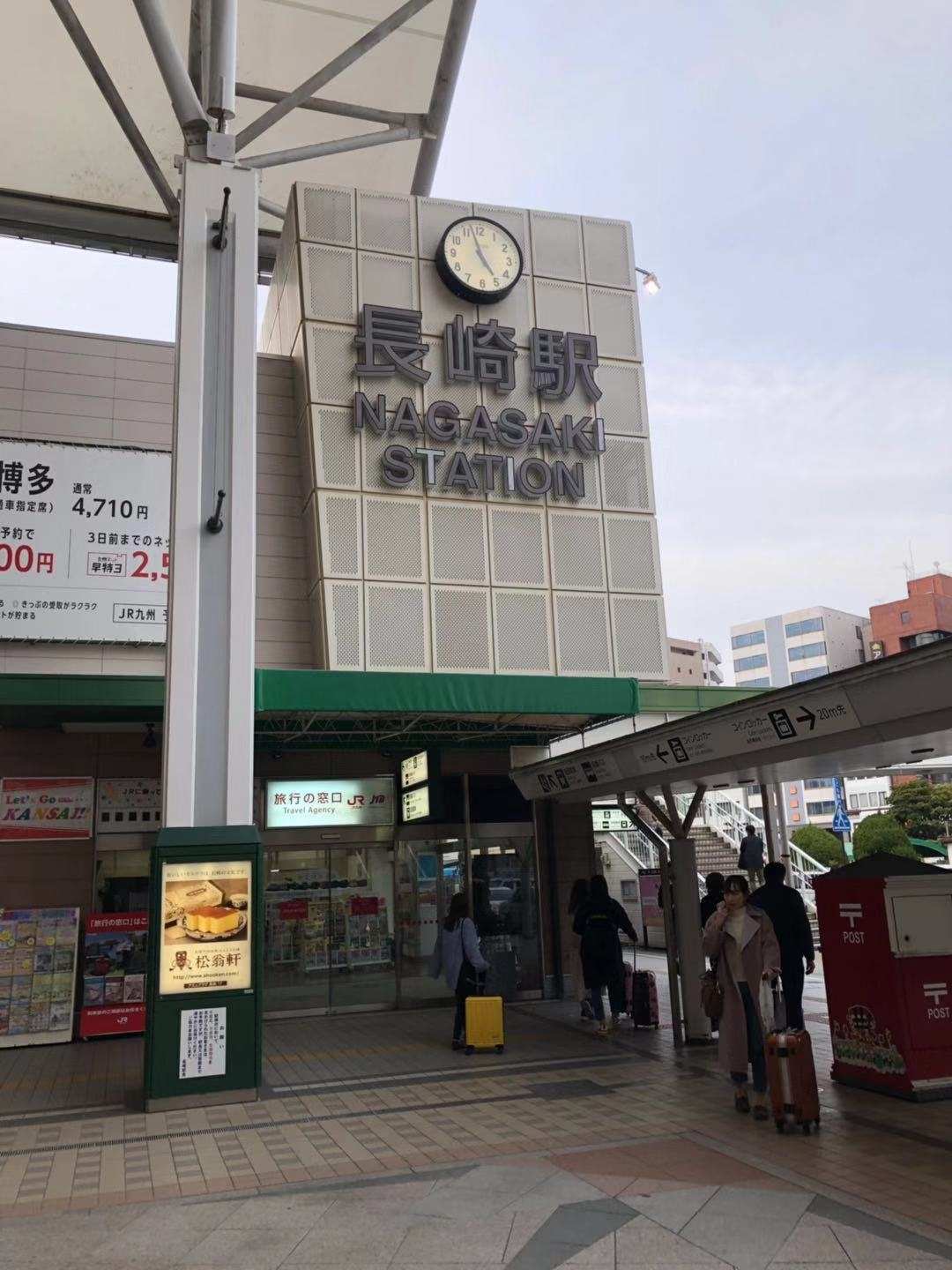
From Tokyo to Nagasaki, I took the Shinkansen to Hakata and transferred to the Kamome Limited Express. It was a gloomy February day, and the sky felt heavy, almost suffocating. The long journey meant I arrived late in the evening. As soon as I stepped out of the station, I stopped at a tiny mom and pop restaurant before heading to the Nagasaki Catholic Center Youth Hostel for the night. I ordered ramen, the cheapest thing I could get

at the time. I remember the older Japanese man behind the counter staring at me as soon as he realized I was Chinese, not Japanese. Not in a hostile way, more like curiosity, as if I was from another planet. But he and his family were incredibly kind. Even though we could not communicate, I felt a warmness overflowing me. I could almost imagine myself sitting in the same kind of small restaurant back home in China. The sense of similarity surprised me. It brought a strange feeling of being at home.
There were very few customers that night. After finishing my ramen, I walked to the Catholic center, checked in, and went to my tiny room. The heaviness of the air stayed with me. It was as if the sadness of the place was everywhere, even inside the quiet hostel.
The next morning, I woke up early and walked up to Urakami Cathedral. Outside were burned and broken statues that survived the atomic blast, many headless and badly damaged. After reading the plaques and looking around, I walked downhill toward the Peace Park. Suddenly I found myself in the middle of a large memorial area dedicated to the victims of the 1945 bombing, surrounded by statues, monuments, and trees meant to promote world peace.

Because it was still early in the morning, only a few people passed through on their way to work. The emptiness made the park feel almost ghostly. Everywhere I turned, there were reminders of the enormous cost of human life in war. As I read different plaques and the various wishes for peace sent from around the world, I felt heavier and heavier.
Then, as I turned toward the Atomic Bomb Museum, I noticed a Japanese businessman walking toward the Peace Statue. He stopped right next to me, on my right side. He wore a suit, held a briefcase, and had a very sincere, almost solemn expression. Then he bowed deeply toward the statue and murmured a prayer in Japanese. I couldn’t understand the words, but the moment felt long, powerful, and almost sacred. When he finished and walked away, I stood there frozen. Something inside me shifted.
I walked to the statue and stayed there for a long time. Suddenly, I felt empathy for my “enemy,” as I had been taught to see them. I thought about the suffering my grandparents’ generation endured under the Japanese occupation, and yet, there I was, standing in the heart of Japan’s own tragedy, feeling the pain of ordinary Japanese people who also paid with their lives because of the war.
By around 8:30 a.m., I reached the museum. I was the first person inside, waiting in the lobby before it opened. When the doors finally opened, only a few Japanese visitors stood behind me.
Inside, the first thing I saw was a destroyed wall clock stopped at 11:02, the exact moment of the blast. Time, frozen forever. There were fragments from Urakami Cathedral, survivor testimonies, exhibits about medical effects and recovery, displays of global nuclear weapons history, and the silent memorial chamber.
Standing in front of the 3D visual explanation of the bomb blast, seeing how the shockwave expanded over the terrain, I finally understood the scale of

devastation that ordinary Japanese people experienced. Some images were hard to look at. It made me think about those who did not die instantly, but suffered terribly before death came. And while no amount of suffering can erase the wrongs committed during the Japanese occupation of China, I could still relate to their pain. War always destroys ordinary people. It is always people like us who pay the price.
I left Nagasaki with extremely heavy emotions. The air felt thick with suffering, and I breathed it in for two days. It was enough to witness how high the cost of war is, and how peace never comes easily. No matter where we come from, and no matter what our histories teach us, we can still feel empathy for one another because we all belong to one category: human. And perhaps, we should not take joy in the suffering of those we once considered enemies, because suffering, in the end, belongs to all of us.


Leave a Reply